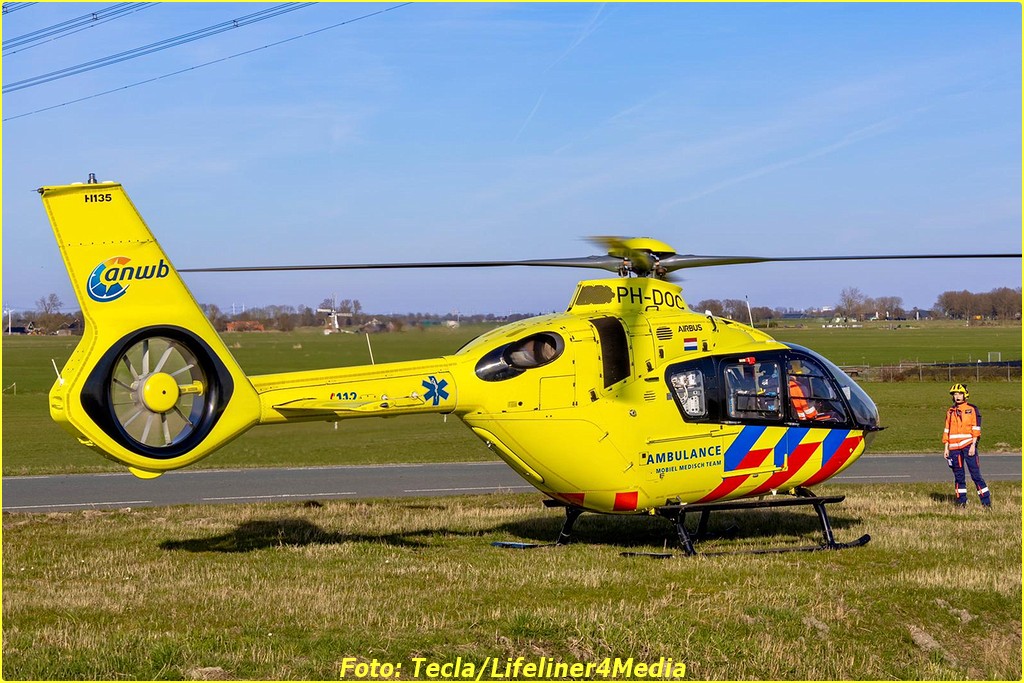
Trauma Helicopter Responds to Den Ham Incidents: A Deep Dive into Emergency Response
Den Ham, a picturesque village nestled in the heart of Overijssel, Netherlands, is renowned for its tranquil landscapes and close-knit community. Yet, even in such idyllic settings, serious incidents can occur, demanding immediate and specialized emergency responses. Recent events have highlighted the critical role of the trauma helicopter, or Mobile Medical Team (MMT), in delivering life-saving care when every second counts. From severe road traffic collisions to unexpected household accidents, the sight of the bright yellow helicopter descending into a nearby field has become a stark reminder of the fragility of life and the robust network of emergency services ready to act. This article explores recent incidents where an *ongeval Den Ham* required the highest level of pre-hospital care, offering insights into prevention and the coordinated efforts of responders.
The Critical Role of the Trauma Helicopter in Emergency Response
When an incident escalates beyond the scope of regular ambulance services, the trauma helicopter is often dispatched. This specialized unit is essentially a flying intensive care unit, staffed by a highly experienced emergency physician (trauma doctor) and a dedicated flight nurse. Their mission is twofold: to bring advanced medical expertise directly to the scene of an accident, and if necessary, to facilitate rapid transport to the most appropriate hospital, even if that hospital is further away but offers specialized care.
The decision to deploy a trauma helicopter is never taken lightly. It typically occurs when there's a high suspicion of severe, life-threatening injuries, such as major trauma from high-speed collisions, falls from significant heights, or extensive burns. Their ability to land in unconventional spots, like a farmer's field adjacent to the incident, bypasses traffic congestion and dramatically reduces response times, often making the crucial difference between life and death. The trauma team can perform advanced medical procedures on-site that would otherwise only be possible in a hospital, stabilizing patients before transport. The recent incidents in Den Ham vividly demonstrate this indispensable service, providing critical assistance for victims of both road accidents and a serious fire pit mishap.
Recounting Recent Road Accidents in Den Ham
The roads surrounding Den Ham, while generally quiet, have recently been the scene of two significant single-vehicle accidents, each resulting in multiple injuries and necessitating extensive emergency intervention. These incidents underscore the unpredictable nature of road travel and the sudden impact an *ongeval Den Ham* can have on individuals and the community.
One such event unfolded on a Sunday evening on the N341 (Ommerweg). The driver of a car reportedly lost control, veering off the road and colliding with a tree in the berm. This severe impact left four individuals injured. Emergency services, including multiple police units, fire brigades, and ambulances, rushed to the scene. Due to the nature of the injuries and the mechanism of the crash, the trauma helicopter was also alerted, landing in a nearby meadow to provide immediate advanced medical assistance. Firefighters worked to extricate the occupants from the damaged vehicle. While two individuals were treated on-site by ambulance personnel, the other two required immediate hospital care and were transported by ambulance. The police launched a comprehensive investigation to determine the exact cause of the accident, examining factors such as speed, driver distraction, and road conditions.
Just hours earlier, another alarming single-vehicle incident occurred on the Sietse Veldstraweg in Den Ham, Groningen (an error in the source, Den Ham is in Overijssel). This Sunday morning accident, occurring around 10:30 AM, also involved four individuals. The police confirmed that two of the victims sustained serious injuries, and all four were subsequently transported to the hospital for treatment. The cause of this accident, too, remains under investigation, highlighting a concerning pattern of severe single-vehicle incidents within a short timeframe in the area. These events collectively emphasize the immediate and far-reaching consequences of road traffic accidents. For more detailed information on these tragic occurrences, you can refer to related reports like
Den Ham Road Crashes: Four Injured, Police Investigate.
Road Safety: Practical Tips to Prevent an Ongeval Den Ham
Preventing road accidents is a collective responsibility. While investigations into specific causes are ongoing, many collisions can be avoided by adhering to fundamental safety practices:
- Maintain Focus: Distracted driving (e.g., using mobile phones, eating, interacting with passengers) is a leading cause of accidents. Keep your eyes on the road and hands on the wheel.
- Adhere to Speed Limits: Speed limits are set for a reason. Driving within them allows for more reaction time and reduces the severity of potential impacts.
- Regular Vehicle Maintenance: Ensure your vehicle is in good working order. Check tires, brakes, lights, and fluids regularly. A mechanical failure can quickly lead to loss of control.
- Be Aware of Conditions: Adjust your driving to weather (rain, fog, ice) and road conditions. Reduce speed and increase following distance in adverse situations.
- Avoid Impaired Driving: Never drive under the influence of alcohol, drugs, or when severely fatigued. Impairment significantly reduces judgment and reaction time.
- Wear Seatbelts: Always ensure all occupants are properly buckled up. Seatbelts dramatically reduce the risk of serious injury or fatality in a crash.
The Unforeseen Danger: A Fire Pit Incident in Den Ham
Beyond road incidents, emergencies can arise from seemingly innocuous activities. Such was the case during a late-night incident on the Weelinckbroek in Den Ham, where a relaxing evening around a fire pit took a grave turn. Around midnight, emergency services were urgently summoned after a person sustained severe injuries from a fire pit incident.
Details surrounding what exactly went wrong remain unclear, but the victim suffered serious burns. Given the critical nature of burn injuries, which can be life-threatening and require highly specialized medical care, the trauma helicopter was once again dispatched. The MMT landed in a field along the Esweg, just outside Den Ham, providing crucial on-site medical attention. Following stabilization by the trauma team, the victim was transported by ambulance to a hospital in Groningen. In a testament to the severity of the situation and the ongoing need for advanced medical oversight, a trauma doctor accompanied the ambulance, ensuring continuous expert care during transit. The police promptly secured the area, allowing emergency services the necessary space to operate safely and effectively.
Fire Pit Safety: Essential Guidelines to Avoid Injury
Fire pits offer warmth and ambiance, but they demand respect and careful handling to prevent serious accidents like the one in Den Ham.
- Proper Placement: Site your fire pit at least 10 feet (3 meters) away from any structures (homes, sheds, fences), overhanging branches, or dry vegetation.
- Constant Supervision: Never leave a fire pit unattended, especially when children or pets are nearby.
- Safe Ignition: Use kindling and paper to start a fire. Avoid using flammable liquids like gasoline or lighter fluid, which can cause dangerous flare-ups.
- Keep Accelerants Away: Store charcoal lighter fluid, propane tanks, and other flammable materials well away from the fire pit.
- Have Extinguishing Means Ready: Keep a bucket of water, a garden hose, or a fire extinguisher within easy reach to quickly douse any stray embers or small fires.
- Thorough Extinguishing: Ensure the fire is completely out before leaving it. Douse embers with water and stir them, then douse again until no heat or smoke is present.
- Children and Pet Safety: Establish a clear safety zone around the fire pit and ensure children and pets understand and respect it. Hot surfaces can cause severe burns even hours after the fire is out.
Community Impact and Emergency Services Collaboration
These varied incidents highlight the resilience of Den Ham's emergency services and the coordinated effort required to manage serious situations. The police, fire brigade, ambulance services, and the specialized trauma helicopter team work seamlessly together, often under immense pressure, to save lives and mitigate further harm. The community also plays a vital role by cooperating with emergency personnel, clearing roads for responders, and respecting cordons.
The repeated deployment of the trauma helicopter for different types of incidents underscores the fact that severe emergencies are not confined to a single category. Whether it's a high-impact traffic *ongeval Den Ham* or an unforeseen domestic accident, the principles of rapid response, advanced medical intervention, and coordinated multi-agency efforts remain paramount. For a broader look at the impact of such emergencies on the community, you can read more in related articles such as
Serious Injuries in Den Ham: Crashes & Fire Pit Incident. Each incident serves as a powerful reminder of the potential dangers in everyday life and the indispensable services that stand ready to respond.
In conclusion, while Den Ham retains its charm and tranquility, recent events have brought into sharp focus the vital role of the trauma helicopter and the dedication of all emergency services. From critical road accidents to a severe fire pit incident, these teams provide a crucial safety net for the community. By understanding the risks, practicing safety, and appreciating the efforts of these frontline heroes, residents can contribute to preventing future incidents and ensuring that when an *ongeval Den Ham* does occur, the best possible care is readily available.